What's a Bitcoin and why should I care? Because it's really cool!
There's a lot of questions with the recent hype around BitCoin. Especially during the holiday spending season, what does this mean for about the proposed future of spending money?
Coins are kept in your wallet application on your desktop computer. You can also use an online service to manage that for you.
You can exchange dollars for coins on markets like mtgox. Right now it's right at almost $700 per coin down from the recent hype that took it up to $1,200.

This should remind you that it's speculative and if you need pay your rent with coins, they're only as valuable as the current exchange rate.
The best way to get Bitcoin of course is earning them for services and goods which you can do by accepting the digital payments to your unique address. Companies like BitPay make it easy for exiting ecommerce sites to accept Bitcoins.
Where does a Bitcoin come from?
The other way that you can obtain Bitcoin's is by mining them with your computer. It's built to be purposefully intensive so the growth rate is predictable.
"Miners" dedicate computational resources to maintaining the network accuracy and are rewarded with new coins created at a predetermined rate, currently 3600 coins a day.
Where can I spend it & what can I buy with it?
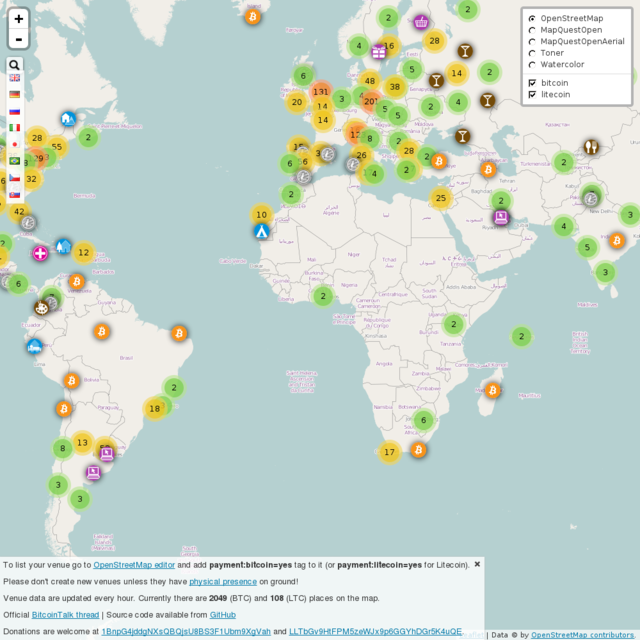
There's an exhaustive list on the official wiki that includes everything from web hosting, hotels bookings, and professional services, to gambling and drugs sold on the Dread Pirate Roberts now defunct Silk Road. And now there's a CoinMap that helped me find a small local grocer that's a long time advocate of sustainable agriculture and food production in San Diego.
How does a transaction work?
When you want to send money to someone, you open your wallet and create a transaction to their address such as, and the amount you want to send.
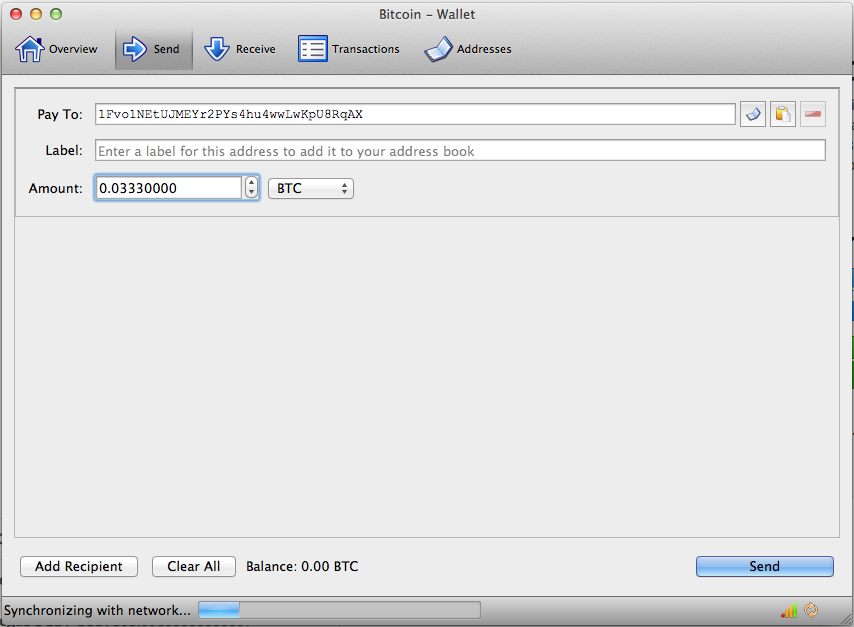
Fee's can be included essentially as a tip to the miners for their work, and as a deterrent to spammers. Here's a visual of what happens behind the scenes to make it happen.
How does it work? How do I know it's secure?
Bitcoin is the first, and inspiration for more than 60 other cryptocurrencies. The software and algorithms are open source that provides the transparency most nerds love and trust & making adorable spin offs possible.
Good to know:
You might have heard that Bitcoin is completely anonymous, but actually the entire block chain is public, showing all transactions. Anyone can see senders and recipients of transactions, including the amount, but accounts are represented by non identifying hashes.
Other potential uses for distributed crypto apps:
There's a Namecoin for DNS promoted by the Dot-Bit project called to distribute domain names that could be interesting.
Signatures for contracts could be digitally signed and authenticated and verified by multiple parties.
I also recently stumbled on this guy who is "publicly traded". I've thought that would be a great idea for a community site like reddit to give a say to the users as shareholders.
What BitCoin is good for right now.
If you need to transfer money internationally, it could save you on fees. You're free to engage in transactions you might not be able to otherwise like gambling.
Besides those specific purposes, I find it hard to see Bitcoin's getting into most consumers hands. It's currently unstable and a speculative market.
Questions that I still have:
With all of these computers grinding away to solve some algorithm hashes, could we harness that power to a purpose like folding proteins or something?
Let's start with some basics questions:
How do I get the currency?Coins are kept in your wallet application on your desktop computer. You can also use an online service to manage that for you.
You can exchange dollars for coins on markets like mtgox. Right now it's right at almost $700 per coin down from the recent hype that took it up to $1,200.
This should remind you that it's speculative and if you need pay your rent with coins, they're only as valuable as the current exchange rate.
The best way to get Bitcoin of course is earning them for services and goods which you can do by accepting the digital payments to your unique address. Companies like BitPay make it easy for exiting ecommerce sites to accept Bitcoins.
Where does a Bitcoin come from?
The other way that you can obtain Bitcoin's is by mining them with your computer. It's built to be purposefully intensive so the growth rate is predictable.
"Miners" dedicate computational resources to maintaining the network accuracy and are rewarded with new coins created at a predetermined rate, currently 3600 coins a day.
Where can I spend it & what can I buy with it?
There's an exhaustive list on the official wiki that includes everything from web hosting, hotels bookings, and professional services, to gambling and drugs sold on the Dread Pirate Roberts now defunct Silk Road. And now there's a CoinMap that helped me find a small local grocer that's a long time advocate of sustainable agriculture and food production in San Diego.
How does a transaction work?
When you want to send money to someone, you open your wallet and create a transaction to their address such as, and the amount you want to send.
Fee's can be included essentially as a tip to the miners for their work, and as a deterrent to spammers. Here's a visual of what happens behind the scenes to make it happen.
How does it work? How do I know it's secure?
Bitcoin is the first, and inspiration for more than 60 other cryptocurrencies. The software and algorithms are open source that provides the transparency most nerds love and trust & making adorable spin offs possible.
The History of Bitcoin
When I have more time I'll elaborate on the history, because it's so intriguing. The idea originated from the character known as Satoshi Nakamoto, who bestowed the idea on the world as a white paper four years ago, and then vanished a year or two later, saying "the project was in good hands". It's estimated that Satoshi could have nearly $1 billion dollars worth of Bitcoins that he mined early on.Good to know:
You might have heard that Bitcoin is completely anonymous, but actually the entire block chain is public, showing all transactions. Anyone can see senders and recipients of transactions, including the amount, but accounts are represented by non identifying hashes.
Other potential uses for distributed crypto apps:
There's a Namecoin for DNS promoted by the Dot-Bit project called to distribute domain names that could be interesting.
Signatures for contracts could be digitally signed and authenticated and verified by multiple parties.
I also recently stumbled on this guy who is "publicly traded". I've thought that would be a great idea for a community site like reddit to give a say to the users as shareholders.
What BitCoin is good for right now.
If you need to transfer money internationally, it could save you on fees. You're free to engage in transactions you might not be able to otherwise like gambling.
Besides those specific purposes, I find it hard to see Bitcoin's getting into most consumers hands. It's currently unstable and a speculative market.
Questions that I still have:
With all of these computers grinding away to solve some algorithm hashes, could we harness that power to a purpose like folding proteins or something?